
Optional live cme workshop | 2026 Advances in Women's Health
Vasomotor Symptoms as a Vital Sign
Cardiovascular, Metabolic, and Mental Health Risk in Menopause Care
A 2.5-hour interactive workshop for the clinicians who treat women through the menopause transition. Read the risk signal, build the treatment plan, and lead the patient conversation.
Claim your seat when you register for the conference!
Why this workshop
Moderate-to-severe vasomotor symptoms (VMS) are more than a comfort problem. They track with cardiovascular disease, metabolic change, disrupted sleep, and new-onset depression and anxiety during the menopause transition. Clinicians who read that signal early treat the whole patient, not one complaint.
This session moves from physiology to prescription to the exam-room conversation. You practice on real cases and leave with tools you use the next day.
Screen with intent
Read VMS as a marker of cardiovascular, metabolic, and mental health risk, and order the right workup for each domain.
Prescribe by algorithm
Match hormonal and nonhormonal therapies to the right candidate and rule out the wrong one.
Manage the complex case
Build a prescription and monitoring plan for patients who carry cardiovascular, metabolic, and psychological comorbidity together.
Lead the conversation
Use shared decision-making that surfaces patient priorities, answers treatment hesitancy, and confirms understanding.
Built for
Physicians (DOs and MDs), nurse practitioners (NPs), physician assistants (PAs), and every clinician who cares for women in menopause. OB/GYNs, family physicians, and internists all belong in the room.
Faculty
Four clinicians who build menopause care for a living.
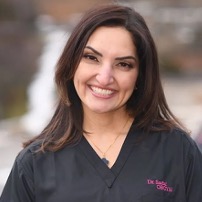
Sadaf Lodhi, DO
FACOOG, FACOG, MSCP, IF
CEO, Femme Vie Health. Menopause specialist and podcast host.
Chappaqua, New York
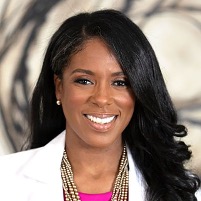
Jessica Shepherd, MD
MBA, FACOG
Chief Medical Officer, Hers. Author of Generation M. Founder, Sanctum Med + Wellness.
Dallas, Texas
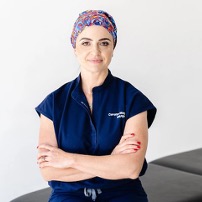
Carolyn Moyers, DO
FACOG
Founder, Sky Women's Health.
Fort Worth, Texas
The agenda
Five modules. Two and a half hours. Physiology to prescription to the patient conversation.
1:00 to 1:30 PM · Dr. MOYERS
VMS as a Whole-Health Signal
KNDy neuron physiology and the shared pathways linking VMS to cardiovascular disease, sleep loss, depression, and anxiety. Live "Risk Roulette" polling puts you on the spot to estimate cardiovascular and depression risk before and after seeing the evidence, then sets the screening bundle you order.
1:30 to 2:00 PM · Dr. Moyers
Building the Treatment Algorithm
Separate FDA-approved hormonal and nonhormonal therapies, including NK3 receptor antagonists, from unproven supplements. Transdermal versus oral safety profiles, SSRIs and SNRIs for dual VMS and mood benefit, and gabapentin. You leave with a comparison grid that maps each drug class to its ideal candidate, primary contraindication, and mental health considerations.
2:00 to 2:40 PM · Dr. Lodhi
The Complex Patient
Build an individualized prescription and monitoring plan for two live cases: a breast cancer survivor with severe night sweats and moderate depression, and a 51-year-old with high fracture risk, moderate VMS, and untreated anxiety. You produce the plan, the dosing, and a three-month monitoring schedule with a mood reassessment checkpoint.
2:40 to 3:10 PM · Dr. Shepherd
Engaging the Patient
Shared decision-making you practice out loud. Elicit patient priorities, including the mood symptoms patients tend to minimize. Handle the real objection: "I'm scared of hormones, the herbs aren't working, I'm exhausted, and I've been crying a lot."
3:10 to 3:30 PM · All Faculty
Q&A/Panel/Synthesis and Commitment to Change
Rapid-fire panel Q&A. Name one practice behavior to adopt within a week, such as screening for sleep apnea or administering a PHQ-9 at every visit where a patient reports moderate-to-severe VMS.
Commercial support
This activity is supported by an educational grant from Astellas Pharma.
Claim your seat.
Register for the 2026 Advances in Women's Health and select the workshop.
acoog education & professional development
Questions? Contact ACOOG Education.
Lifelong learning in women's health. ∞