
acoog live cme workshop
Vasomotor Symptoms as a Vital Sign
Cardiovascular, Metabolic, and Mental Health Risk in Menopause Care
A 2.5-hour interactive workshop for the clinicians who treat women through the menopause transition. Read the risk signal, build the treatment plan, and lead the patient conversation.
Why this workshop
Moderate-to-severe vasomotor symptoms (VMS) are more than a comfort problem. They track with cardiovascular disease, metabolic change, disrupted sleep, and new-onset depression and anxiety during the menopause transition. Clinicians who read that signal early treat the whole patient, not one complaint.
This session moves from physiology to prescription to the exam-room conversation. You practice on real cases and leave with tools you use the next day.
Screen with intent
Read VMS as a marker of cardiovascular, metabolic, and mental health risk, and order the right workup for each domain.
Prescribe by algorithm
Match hormonal and nonhormonal therapies to the right candidate and rule out the wrong one.
Manage the complex case
Build a prescription and monitoring plan for patients who carry cardiovascular, metabolic, and psychological comorbidity together.
Lead the conversation
Use shared decision-making that surfaces patient priorities, answers treatment hesitancy, and confirms understanding.
Built for
Physicians (DOs and MDs), nurse practitioners (NPs), physician assistants (PAs), and every clinician who cares for women in menopause. OB/GYNs, family physicians, and internists all belong in the room.
Faculty
Three clinicians who build menopause care for a living.
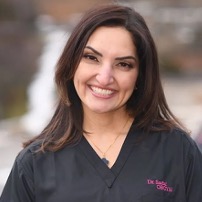
Sadaf Lodhi, DO
FACOOG, FACOG, MSCP, IF
CEO, Femme Vie Health. Menopause specialist and podcast host.
Chappaqua, New York

Jessica Shepherd, MD
MBA, FACOG
Chief Medical Officer, Hers. Author of Generation M. Founder, Sanctum Med + Wellness.
Dallas, Texas
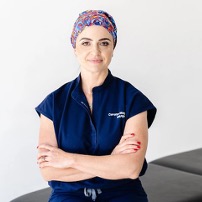
Carolyn Moyers, DO
FACOG
Founder, Sky Women's Health.
Fort Worth, Texas
The agenda
Five modules. Two and a half hours. Physiology to prescription to the patient conversation.
1:00 to 1:30 PM · Dr. Moyers
VMS as a Whole-Health Signal
KNDy neuron physiology and the shared pathways linking VMS to cardiovascular disease, sleep loss, depression, and anxiety. Live "Risk Roulette" polling puts you on the spot to estimate cardiovascular and depression risk before and after seeing the evidence, then sets the screening bundle you order.
1:30 to 2:00 PM · Dr. Moyers
Building the Treatment Algorithm
Separate FDA-approved hormonal and nonhormonal therapies, including NK3 receptor antagonists, from unproven supplements. Transdermal versus oral safety profiles, SSRIs and SNRIs for dual VMS and mood benefit, and gabapentin. You leave with a comparison grid that maps each drug class to its ideal candidate, primary contraindication, and mental health considerations.
2:00 to 2:40 PM · Dr. Lodhi
The Complex Patient
Build an individualized prescription and monitoring plan for two live cases: a breast cancer survivor with severe night sweats and moderate depression, and a 51-year-old with high fracture risk, moderate VMS, and untreated anxiety. You produce the plan, the dosing, and a three-month monitoring schedule with a mood reassessment checkpoint.
2:40 to 3:10 PM · Dr. Shepherd
Engaging the Patient
Shared decision-making you practice out loud. Elicit patient priorities, including the mood symptoms patients tend to minimize. Handle the real objection: "I'm scared of hormones, the herbs aren't working, I'm exhausted, and I've been crying a lot."
3:10 to 3:30 PM · All Faculty
Q&A/Panel/Synthesis and Commitment to Change
Rapid-fire panel Q&A. Name one practice behavior to adopt within a week, such as screening for sleep apnea or administering a PHQ-9 at every visit where a patient reports moderate-to-severe VMS.
Free valet parking
Workshop participants will receive a voucher for free valet parking.
Ready to join us?
Seats are limited and registration is free. Reserve yours before the workshop fills.
Accreditation and details
Everything you need to claim credit and understand how this activity is supported.
Conflict of interest disclosures and risk mitigation
ACOOG requires each planner and presenter to identify all potential conflicts of interest with ineligible companies and mitigates relevant relationships using appropriate strategies.
Unless otherwise noted in the disclosure report, the ACOOG, ACOOG staff, planners and faculty for this activity have no relevant financial relationships to disclose.
Dr. Shepherd is a clinical advisor for OPositiv, Natural Cycles, Pvolve, Ora, and Hologic. She is Chief Medical Director for Hers/Hims. These relationships have been mitigated.
Requirements for successful completion
Participation in the activity, attestation, and completion of an overall evaluation is required to receive CME credit and a statement of credit. All credit must be claimed using ACOOG's Online Learning Center.
Commercial support
This activity is supported by an independent educational grant from Astellas.
CME accreditation
The American College of Osteopathic Obstetricians and Gynecologists is accredited by the American Osteopathic Association to provide osteopathic continuing medical education for physicians.
The American College of Osteopathic Obstetricians and Gynecologists is accredited by the Accreditation Council for Continuing Medical Education to provide continuing medical education for physicians.
CME credit designation
The American College of Osteopathic Obstetricians and Gynecologists designates this program for a maximum of 2.5 AOA Category 1-A credits and will report CME and specialty credits commensurate with the extent of the physician's participation in this activity.
The American College of Osteopathic Obstetricians and Gynecologists designates this live activity for a maximum of 2.5 AMA PRA Category 1 Credits™. Physicians should only claim credit commensurate with the extent of their participation in the activity.
ACOG Cognate Credits
The American College of Osteopathic Obstetricians and Gynecologists designates this activity for a maximum of 2.5 Category 1 College Cognate Credits. A reciprocity agreement with the AMA exists that allows AMA PRA Category 1 Credits™ to be equivalent to ACOG Cognate Credits.
NPs & PAs
The American Academy of Nurse Practitioners Certification Board (AANPCB) recognizes activities approved for Category 1-A credit through the American Osteopathic Association as providing advanced practice CE content hours for applicants seeking renewal through continuing education credit.
The National Commission on Certification of Physician Assistants (NCCPA) recognizes activities approved for Category 1-A credit through the American Osteopathic Association as Regular Category 1 CME for national certification maintenance. All NPs and PAs participating in this activity will receive a certificate of completion commensurate with the extent of their participation in the activity. ACOOG recommends that NPs & PAs check with their certification/licensing authority to confirm credit reciprocity.
Grievances. Any registrant finding evidence that the continuing medical education program presented is inappropriate with regard to facilities, materials, content, or observes any unacceptable promotion by a commercial interest in the same room as the educational activity, whether by company representative or presenter, may submit a grievance in writing to ACOOG, PO Box 17598, Fort Worth, TX 76102. Unresolved issues regarding this activity will require a formal written complaint to the AOA Division of CME, 142 East Ontario Street, Chicago, IL 60611.
Agenda, format & venue changes. We make every attempt to finalize the agenda as soon as possible. However, unforeseen issues often cause presentations to be rearranged, the format to be altered, or venue to be reconsidered. ACOOG reserves the right to modify the agenda, format, and venue at any time without advanced notice.
Claim your seat.
2.5 CME credits, three expert faculty, no charge. Register today.
acoog education & professional development
Questions? Contact ACOOG Education.
Lifelong learning in women's health. ∞